

In 2026, the Victorian housing landscape was transformed by one of the most significant regulatory overhauls in decades. For homeowners considering premium Expandable Homes Victoria, the “red tape” that once made secondary dwellings a logistical nightmare has largely been replaced by a streamlined, “deemed-to-comply” system. These modern expandable homes offer high-quality construction, faster approvals, and flexibility, making them an ideal choice for both metropolitan and regional Victorian properties seeking luxury, efficiency, and compliance with the latest building standards.
However, “easier” does not mean “automatic.” Navigating the distinction between a Planning Permit and a Building Permit is critical to ensuring your luxury modular investment is legal and future-proof.]
Following the Victorian Housing Statement: The Decade Ahead, the rules for adding a second dwelling to your land were fundamentally rewritten. As of 2026, the category of “Small Second Dwelling” (SSD) , often encompassing expandable and modular homes, is the primary pathway for Victorians.
The General Rule for 2026:
In most residential and rural zones across Victoria, you do not need a Planning Permit for an expandable home if:
- The floor area is $60\text{m}^2$ or less.
- It is located on the same lot as an existing dwelling.
- It is not being subdivided from the primary home.
- The lot is over $300\text{m}^2$ (for smaller lots, a fast-track 10-day VicSmart permit usually applies).
2. When a Planning Permit Is Still Required for Expandable Homes Victoria
While the 2026 reforms removed the permit requirement for “simple” sites, Victoria’s complex environmental and heritage overlays remain. You will likely still need Council Planning Approval if your land is affected by:
- Heritage Overlays (HO): If your primary home is in a heritage-protected area, any new structure must be assessed for visual impact.
- Bushfire Management Overlays (BMO/WMO): On sites with high fire risk, Council must approve the siting and defendable space, even for expandable units.
- Flood Overlays (LSIO/SBO): If your land is prone to inundation, the floor level and placement of your modular home must be scrutinized.
- Environmental Significance Overlays (ESO): Common in the Yarra Ranges and Mornington Peninsula, these require permits to ensure native vegetation is protected.
- Pro Tip: Use the Victorian Government’s Planning Maps Online tool. Enter your address to instantly see if your land is “burdened” by an overlay that overrides the standard permit exemptions.
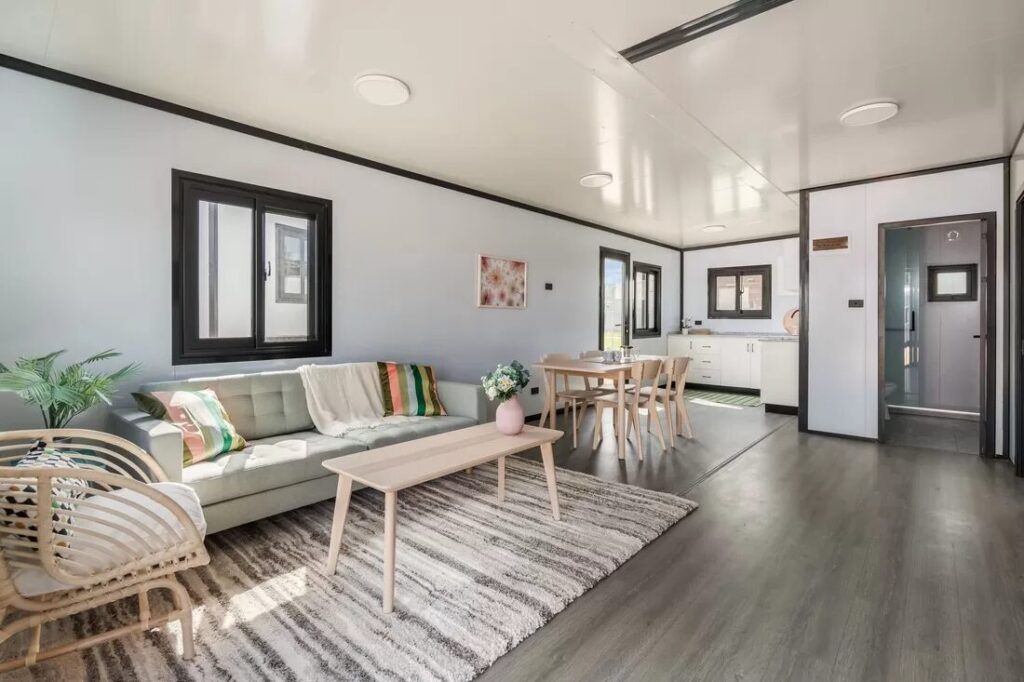
3. The Non-Negotiable: Building Permits
A common misconception in 2026 is that “no planning permit” means “no permits at all.” This is false. Every expandable home in Victoria must have a Building Permit issued by a Registered Building Surveyor.
Why the Building Permit is Critical:
- 7-Star Efficiency: Your expandable home must be certified to meet the NCC 2025/2026 7-star energy rating.
- Structural Integrity: A surveyor must verify that the expandable hinges, chassis, and footings are engineered for Victoria’s wind loads.
- Livable Housing Standards: As of 2026, all new dwellings must meet accessibility standards (e.g., wider doorways and reinforced bathroom walls).
- Siting Requirements: Even without a planning permit, your home must comply with Part 5 of the Building Regulations (setbacks from boundaries, height limits, and overshadowing).
4. Permit Costs and Timelines (2026 Estimates)
| Permit Type | Necessity | Estimated Time | Estimated Cost |
| Planning Permit | Conditional (Overlays) | 3–6 Months | $2,000 – $5,000 |
| VicSmart Permit | Small lots ($<300\text{m}^2$) | 10 Business Days | $500 – $1,200 |
| Building Permit | Mandatory | 4–6 Weeks | $3,500 – $7,000 |
5. Relocatable vs. Permanent: The Legal Distinction
In 2026, the Victorian Building Authority (VBA) treats an expandable home as a Class 1a Building (a self-contained dwelling).If your expandable home is “relocatable” (e.g., it sits on a steel chassis rather than a concrete slab), you may have different requirements regarding foundation tie-downs and Bushfire Attack Level (BAL) ratings. However, for occupancy purposes, the standards for plumbing, electricity, and fire safety are identical to a brick-and-mortar house.
6.Why Expandable Homes Victoria Are Gaining Popularity in 2026
In 2026, Expandable Homes Victoria have become one of the smartest housing solutions for homeowners seeking flexibility, affordability, and faster approvals. With updated Victoria planning permits and simplified Small Second Dwelling rules, many property owners can now add a high-quality expandable home without lengthy delays. These homes are engineered to meet strict 7-Star energy standards, modern accessibility requirements, and bushfire safety regulations. Whether used for rental income, intergenerational living, or a private workspace, expandable homes offer a future-ready investment that adapts to changing family and financial needs across metropolitan and regional Victoria.
7.Understanding Planning Permits for Expandable Homes Victoria
Before installing Expandable Homes Victoria, it’s essential to understand how planning permits and building permits work together. While many properties no longer require a full planning permit under the Small Second Dwelling provisions, overlays such as heritage, bushfire, flood, or environmental controls can still trigger council approval. A registered building surveyor must issue a Building Permit to confirm structural safety, energy efficiency, and compliance with the National Construction Code. By conducting proper due diligence and checking your local council regulations in advance, you can avoid costly delays, unexpected fines, and ensure your expandable home project proceeds smoothly and legally in 2026.
8. Frequently Asked Questions (FAQs)
Can I rent out my expandable home to a stranger?
Yes. Unlike the old “Dependent Person’s Unit” (DPU) rules which expired in 2025, the 2026 “Small Second Dwelling” laws allow you to rent the unit to anyone—family, long-term tenants, or as a short-stay Airbnb.
What happens if I build without a permit?
Victoria has strengthened enforcement in 2026. Building without a permit can result in fines exceeding $10,000, and Council can issue a “Notice to Rectify,” which may involve the forced removal of the structure.
Does an expandable home need a separate water meter?
While it can share the main home’s connection, a premium expandable home often requires its own sub-meter to manage billing for tenants. Note that under 2026 rules, new SSDs cannot be connected to reticulated natural gas—they must be all-electric.
Conclusion: Plan Before You Expand
The 2026 reforms have made Victoria the most modular-friendly state in Australia. By focusing on a high-quality, 7-star rated expandable home, you can likely bypass the planning office and move straight to building.
Would you like me to generate a “Pre-Check Document” for your specific Victorian council so you can see exactly which overlays apply to your property?